
Why Japan’s “Business as Usual” Doesn’t Always Translate: Part 3 — Bringing Sanpō Yoshi into Management
Through this series, I explore the often-unseen cultural differences I have come to recognize through approximately 15 years of living abroad, working in international environments, and supporting Japanese companies in their sustainability efforts.
In the previous article, I discussed the differences between the traditional Japanese approach to living in harmony with nature and the concept of natural capital. This time, I would like to explore the relationship between Sanpō Yoshi, a long-standing Japanese business philosophy, and the increasingly important concept of stakeholder engagement.
The Spirit of Sanpō Yoshi Still Lives Within Companies
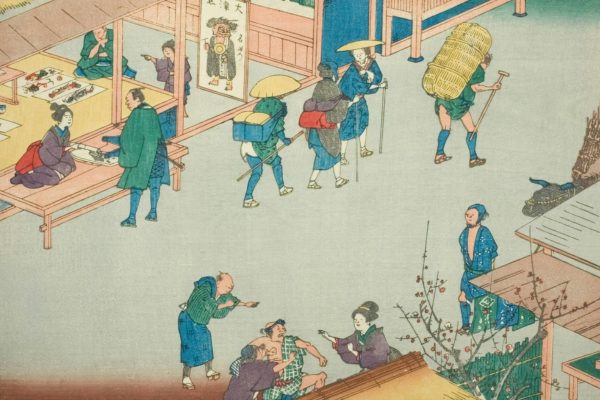
“Good for the seller, good for the buyer, and good for society.”
Often associated with the Omi merchants*, Sanpō Yoshi is a business philosophy that emphasizes the importance of benefiting not only the seller and the buyer, but society as a whole.
In the companies I have supported, I have seen this mindset embedded in everyday business practices, whether through a commitment to maintaining relationships with local communities or through an emphasis on building trust with customers.
At the same time, when stakeholder engagement comes up, I sometimes hear questions such as: “What should we actually do?”
In practice, the companies I work with are already engaging with stakeholders in a variety of ways. These include customer surveys, supplier assessments, information sessions for local residents near factories, and employee satisfaction surveys.
So why is there still uncertainty?
In my experience, one underlying reason is that companies have not always established a shared understanding of who they need to engage with as an organization, or how the insights they gather should inform management decisions.
Identifying Who the Company Needs to Engage With
Companies interact with a wide range of stakeholders, including customers, employees, shareholders, business partners, local residents, government authorities, and financial institutions. Beyond these groups, there are also raw material producers, logistics providers, partner companies, and many others who support a business or are affected by its activities.
In my work with companies, I have found that individual departments often have a good understanding of the people they interact with in their day-to-day work. However, there are fewer opportunities to connect these relationships across the organization and consider a broader question:
“Whose involvement makes our business possible?”
I often begin by asking:
“Who are your stakeholders?”
“Would you say they are your customers, employees, and shareholders?”
Then I ask a series of more specific questions:
“Who transports your products?”
“Who supplies your raw materials?”
“Who lives near your factories?”
As we work through these questions, people begin to recognize the relationships they may not have initially considered, such as those with logistics providers, local communities, and suppliers.
Looking at these relationships from a company-wide management perspective helps connect what were previously separate, department-level perspectives. Gradually, the full picture of the company’s stakeholder relationships becomes clearer.
Seeing the Full Picture Helps Companies Decide Where to Focus
Once the full picture becomes clear, companies can begin to consider two important questions:
“Who do we, as a company, need to engage with now?” and “What do we need to learn from them?”
This does not mean deciding that certain stakeholders are unimportant. The relationships individual departments have built over the years remain just as valuable as before.
At the same time, management needs to consider how to allocate limited time, personnel, and budgets, including whose voices should be heard more carefully and how those perspectives should inform management decisions. Companies can then determine where to focus their efforts by considering factors such as the impact their business has on people and society, as well as the influence stakeholders have on the business.
Once the direction is clear, existing dialogue and engagement activities can also be viewed differently.
For example, at information sessions for local residents, the company might benefit from listening more closely to community members rather than simply communicating information. Supplier assessments might be improved by including questions about human rights and environmental issues. Customer surveys could also be reviewed not only as a means of improving products, but as an opportunity to reconsider how the company engages with its customers.
Turning Existing Dialogue into a Management Framework
As a first step toward stakeholder engagement, I recommend bringing together the surveys, interviews, information sessions, and other engagement activities that a company already conducts.
Who is being asked what? Why are these activities being carried out? And where are the insights collected actually used?
Reviewing these questions one by one can lead to realizations such as:
“Now I see what it means to look at the whole picture.”
“We’ve been asking the same people to complete similar surveys multiple times, so perhaps we can streamline the process.”
If multiple departments are sending similar surveys to the same stakeholders, those surveys may be consolidated. Information sessions can also be redesigned once the company has clarified what it wants to learn from them.
Rather than adding more work in the name of sustainability, I see this as an opportunity to organize existing activities in line with the company’s overall direction and make better use of them. This can reduce duplication and unnecessary work while improving the quality of dialogue.
Furthermore, when everyone shares an understanding of who the company engages with, why it engages with them, and how their input informs management decisions, the overall direction can remain consistent even when individual responsibilities change. This creates a framework that allows the company to sustain and improve stakeholder engagement without relying solely on individual employees’ experience.
Bringing Sanpō Yoshi into the Next Era of Management
Sanpō Yoshi represents a value system rooted in caring about society. Stakeholder engagement builds on this idea by identifying exactly who that society comprises, considering how to engage with them, and determining how their voices can inform management decisions.
I see this as a way of bringing the values of Sanpō Yoshi into contemporary business management.
By organizing the relationships and dialogue that companies have cultivated over time, clarifying their direction as an organization, and reviewing existing activities, they can create a more consistent approach that does not depend on individual employees. Insights gained through dialogue can then inform management decisions and contribute to better business practices and stronger relationships.
The goal is not to introduce more initiatives, but to build on what already exists and evolve it into a better approach for the company as a whole.
I believe this is how Japanese companies can carry the values of Sanpō Yoshi forward into the next era of business management.
*Omi merchants were traders from the Omi region (present-day Shiga Prefecture, Japan) who established businesses and trading networks across Japan from the sixteenth to the nineteenth centuries.
Note: This article was translated from Japanese using AI. You can read the original Japanese version here.

Natsumi Pickett
Team Leader, Sustainability Solutions Group, Neuromagic Inc.
She specializes in sustainability strategy and ESG disclosure, with a strong background in business communications in both Japanese and English. She studied international trade and developed a global perspective through volunteer work in medical and educational support, as well as approximately 15 years of living abroad. Having completed GRI Certified Training, she supports companies in advancing their sustainability efforts through strategy development, sustainability reporting aligned with GRI and TNFD frameworks, ESG ratings and assessments, and corporate training.
Natsumi Pickett’s “Why Japan’s ‘Business as Usual’ Doesn’t Always Translate” |
More in this category
Why Japan’s “Business as Usual” Doesn’t Always Translate:Part 2 — Why Japanese Companies That Have Long Valued Nature Are Now Grappling with Natural Capital
Sustainability Strategy
World Ozone Day: Turning Environmental Change into Business Opportunity
Sustainability Strategy
Why Japan’s “Business as Usual” Doesn’t Always Translate: When Doing the Right Thing Isn’t Enough to Build Trust Globally
Sustainability Strategy