
Design Sprint 101: Problem Definition
If you want to start implementing Design Sprints or leveling up your problem-solving skills, this article is for you.
Speed is one of the main benefits of Design Sprints when trying to solve problems within a team. However, it's not easy to set aside an entire workweek to run a sprint, which makes it imperative that time is well spent.
Design Sprints are essentially a problem solving method, and one of the most important steps for running a successful Design Sprint is defining the problem your team needs to tackle. If the problem or challenge is not clear or team members have different opinions, the results of your sprint are not likely to be relevant or useful.
So what kind of problem/challenge are we talking about here? How do we know if a challenge is appropriate for a design sprint?
Why is Problem Definition so Important?
There are four primary reasons you need to clearly define your problem/challenge before a Design Sprint:
Verify that you really need a design sprint.
This is arguably the most important reason for careful problem definition. If you have enough materials, goals, and your plans are clear, do you definitely need to run a design sprint? Is it worth taking a week away from your regular work? In many cases it is— but Design Sprints are not always the solution.
Know who you need for your design sprint team.
Once you have defined the challenge for your design sprint, you will better understand who should be involved, and have a general picture of project stakeholders. From there, you can see who should be involved in the sprint and whether it is feasible to implement. In addition, you will have a better understanding of what users are relevant, and will have an easier time recruiting for user testing.
Gain stakeholder understanding.
In addition, by clarifying the challenge, you will know what you want to solve for— i.e, what result it is that you are working for. In addition, you will be able to better communicate the significance of the design sprint to outside stakeholders.
Expand possibilities.
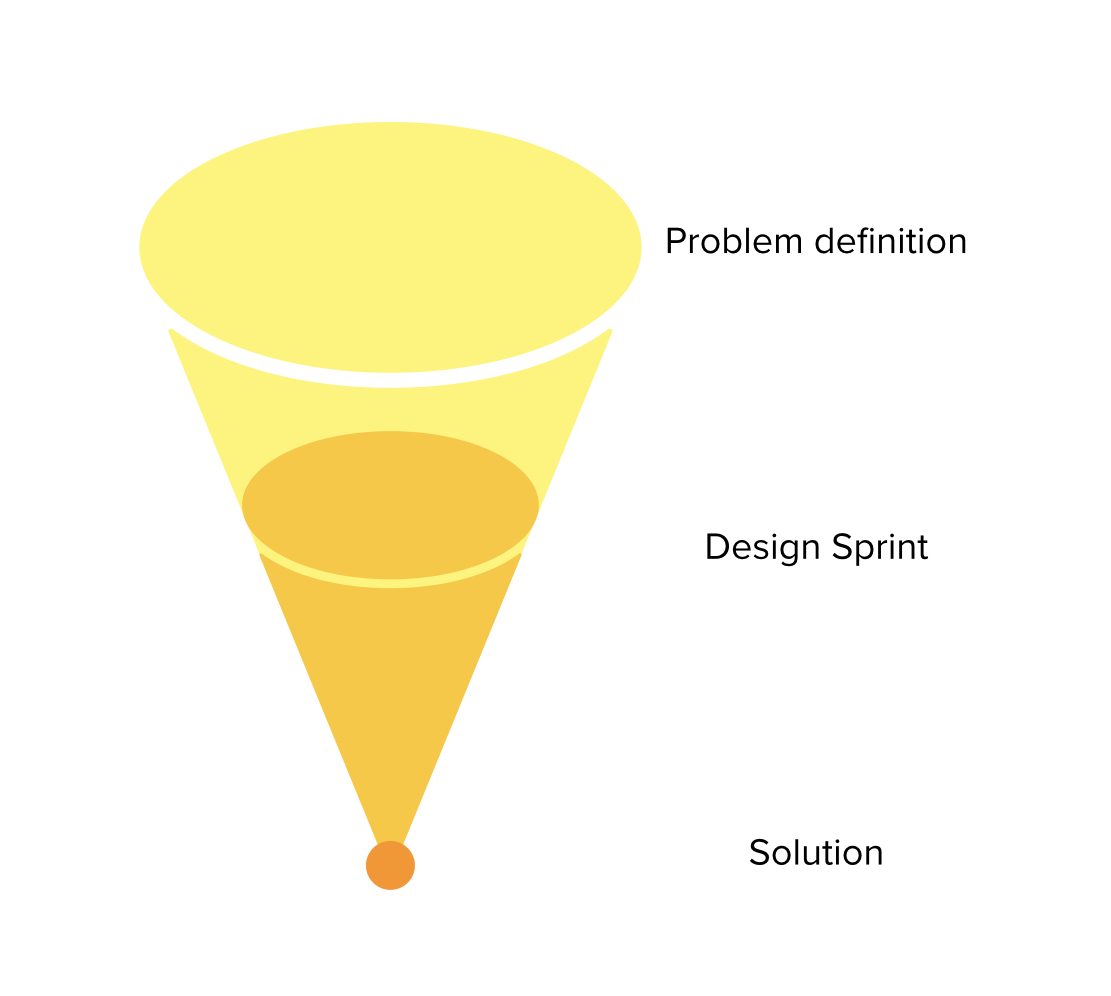
Challenge definition has the potential to both narrow the scope of the problem and broaden the range of solutions that can emerge. In fact, the process of "understanding the situation, identifying the problem, and solidifying goals" conducted on the first day will set the tone for the entire sprint. Specifically, you can co-create an image of what your team is aiming for in the sprint through setting long-term goals and problem definition statements.
When Should Problem/Challenge Definition Happen?
Define the issues you'll address during the planning phase of your Design Sprint. Usually this will be about a month to a few weeks prior. During the design sprint, you will determine a narrower goal based on this broader challenge.
How Do You Define Your Sprint Challenge?
The way to define a challenge depends on the organization, and the size and type of issues you are facing. Generally, this is done in meetings or workshops.
Consider these four steps when defining a problem:
- Where - Where is this challenge?
First consider the background of the challenge. There are various ways to scope and view the issue, but it is important to reconcile assumptions among and agree among the stakeholders. - Who - Whose problem is it?
Next, understand the owner of the problem - the client, the user, etc. Who does this problem belong to? Who does it concern in particular? After clarifying the context further, define who is involved in the issue. If it is a user issue, you may want to include the user's perspective during the actual sprint. - Why - Why do you want to solve the problem?
Identify your business needs and client needs. Connect the challenges of the design sprint to your business goals, and consider whether there is really value in solving those challenges. - What - What is the nature of the problem?
What is the primary challenge? Is it complex or large? Make sure that the stakeholders are on the same page and create a Problem Statement.
The ideal problem statement is one that is realistic in scope, but has the potential to generate a variety of solutions. Be careful not to be too broad in scope, or you will not be able to come up with a concrete solution. Also, it is good to include verbs that indicate action, such as "create," "improve," etc., and human-centered statements that put the user, etc., at the center.
Here is an example statement:
How can we improve communication between different departments in a siloed organization?
How do you feel about the definition of issues in design sprints so far?
Design Sprints are a problem solving method, and defining and finding those problems is an important process that play a fundamental role in sprint success.
Tags