
Beginners Guide To Design Sprints [2022]
If you're in the product development or design fields, you've probably heard about Design Sprints. If you want to run a Design Sprint in your organization, or you just want to understand more about what a Design Sprints are and how they're used— this article is for you!
We've broken down Design Sprint 101 into sections as follows:
- What is a Design Sprint?
- The Design Sprint Process
- When to Run a Design Sprint
- Design Sprint Features
- Preparing for a Sprint
- After the Sprint
What is a Design Sprint?
In his debut book Sprint, Design Sprint inventor Jake Knapp defines the Design Sprint as:
A five-day process for answering critical business questions through design, prototyping, and testing ideas with customers.
In short, Design Sprints are a workshop style process designed to efficiently develop products and services. Through this process, you can go from idea generation to user testing in a short period of time with minimal risk and cost.
In the past, when a company developed a new product or improved an existing service they usually came up with a new idea, evaluated and adjusted it, started production, released it, and then collected data. After initial release, they would adjust and make improvements based on consumer feedback. Following this method, it can take years to create a product that truly satisfies users. Products cannot keep up with market needs, and more and more resources are consumed.
Design Sprints were developed to solve this problem. In recent years, Design Sprints have gained significant traction in the design and product communities, and are implemented regularly in-house in such well-known companies as booking.com Facebook, and Spotify.
At Neuromagic, we use two main kinds of Design Sprints. The first is the more popular Google Ventures Design Sprint, created by Jake Knapp. The second is the Service Design Sprint, created by Tenny Pinheiro. The two sprints follow the same concepts, but each has its own characteristics and best use cases. You can find out more about what makes them different in this article: "The Service Design Sprint vs. The Product (GV) Design Sprint"
The Design Sprint Process
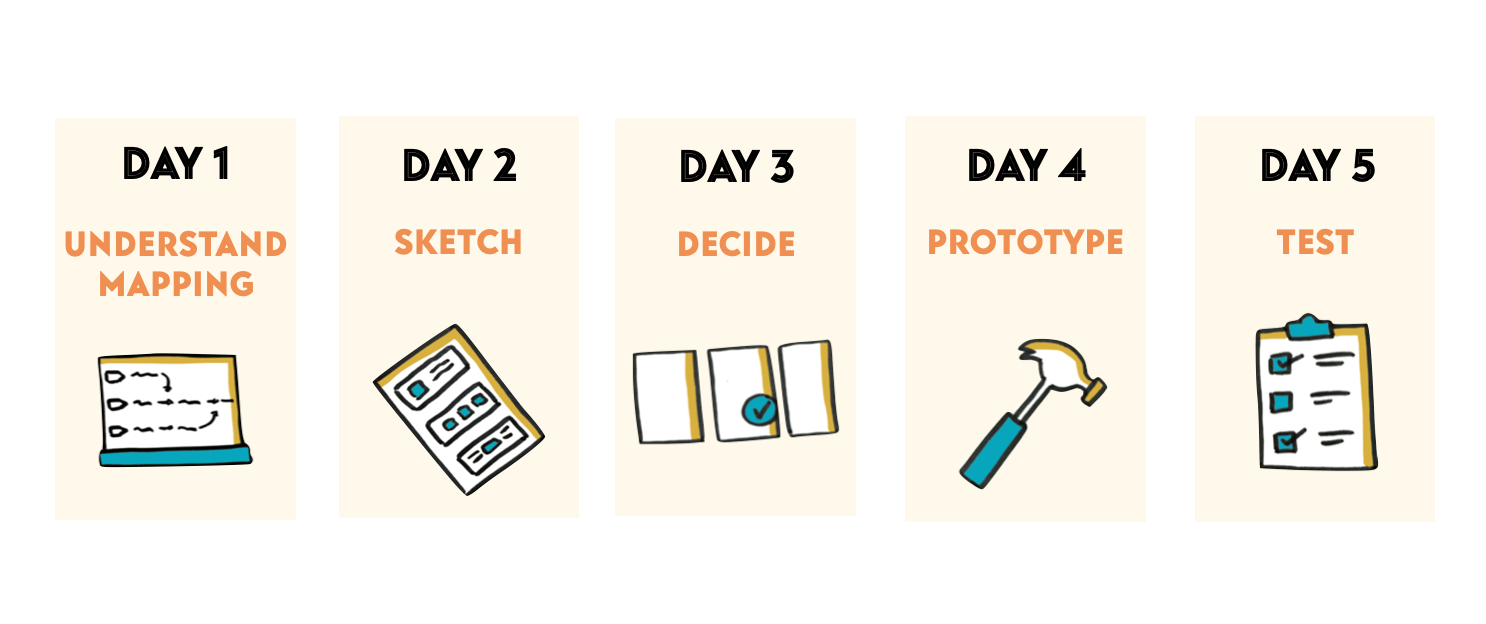
Day 1|Understand & Decide
On day one, participants collect data and visualize the user journey, ensuring all members have the same level of knowledge about the project, and defining the challenge to tackle during the Sprint.
Day 2|Diverge & Sketch solutions
On the second day, participants brainstorm and research existing services and products on the market to generate as many new ideas as possible. After that, each participant sketches out their own potential solution.
Day 3| Decide On Solutions
The third day is centered on decision making. Through discussion and voting, the Sprint team will decide together which solution they want to test and draw a storyboard to make the prototyping process smoother.
Many teams get lost in endless discussions when making decisions. Design Sprints use a structured process that includes personal working/voting/thinking time as well as time-boxed discussions for more efficient decision-making.
Day 4|Prototype
On Day 4, Sprint Team members work together to create a workable prototype of their selected solution.
In the traditional product development process, you may create a very realistic prototype or minimum viable product (MVP). However, during a Design Sprint your goal is testing and verifying hypotheses as quickly as possible. A perfect prototype is likely impossible to achieve in one day-- just make sure it is should be realistic enough for users to use and understand.
Day 5|Test
On Day 5, 5 users are invited to test the prototype. The team can then review results from user tests and adjust the direction of the project, either moving forward according to the original idea, making small changes, or, if unsuccessful, dropping the idea entirely.
Generally speaking, it takes about a minimum 5 users to discern behavior patterns when conducting user surveys.
Depending on the situation, teams can adjust the time required for each section of the Design Sprint. There are now several versions of the design sprint, which range from 4 to 5 days.
In addition to the Sprint book, there are many Design Sprint resources on the Internet. We recommend the following:
- The Design Sprint (Google Ventures): The official website of The Design Sprint launched by Google Ventures. This site contains useful daily checklists and links to YouTube videos that explain sprint exercises.
- Design Sprint (Google): The official website of The Design Sprint launched by Google. From icebreakers to prototype testing, it features many useful toolkits and case studies.
- Workshopper: A website operated by Berlin-based product design consulting company AJ&Smart. AJ&Smart has tons of resources for reference on their blog and youtube channel, including tips for running online workshops! If you'd like to learn more about the founders of AJ&Smart, check out our interview with CEO Jonathan Courtney, "How to Run Design Sprints and Workshops Like a Pro, with Jonathan Courtney".
When to Run a Design Sprint
Design Sprints can be implemented by almost any organization. They are most useful when key problems need quick answers, when a project feels stagnant or unsustainable, or when a team encounters a problem and cannot find a clear solution. Use them when:
Sprints are Good For...
- Assessing the feasibility of a new project
- Promoting a new project, product or service
- Improving a specific part of a product or service
- Developing a roadmap to create a minimum viable product
- Testing on a new target audience
- Establish marketing and growth strategies
However, you cannot expect to solve every problem through a Design Sprint. Especially when you encounter the following situations, you may find that Design Sprint is not so effective:
Sprints are NOT so Good For...
- When perfecting a complex products or services usually contain many features that need to be explored. If you assume that all of those features can be verified in a single Design Sprint, the results will be disappointing. The strength of design sprints is to find solutions to specific issues.
- When trying to test multiple hypotheses. Design Sprints are only one week long! Few teams can manage testing multiple hypotheses in this short period.
- When the problem is is not yet understood or clear enough. The Design Sprint is a process that helps you formulate a solution to an issue. Before the Sprint, the team must clearly define that issue and make sure that solving it is important to business goals and customer needs.
- When the team already has a solution in mind. In this case, there is no need for the first 3 days of ideation, sharing, and decision-making.
- When you do not have a follow-up plan or resources to support the results of the Design Sprint. The week could end up a waste.
- When you only want to improve a very small feature of a product or service. Design Sprints cannot replace the UX process. Please use them when you need to answer key questions or establish a project direction.
Design Sprints are not magic! You cannot develop and launch new product or service using only a Design Sprint. However, when combined with other design processes, they can help make your work significantly more efficient and effective.
Design Sprint Features
There are a few key characteristics, tools, and ways of thinking that make the Design Sprint process unique.
1. Time-box
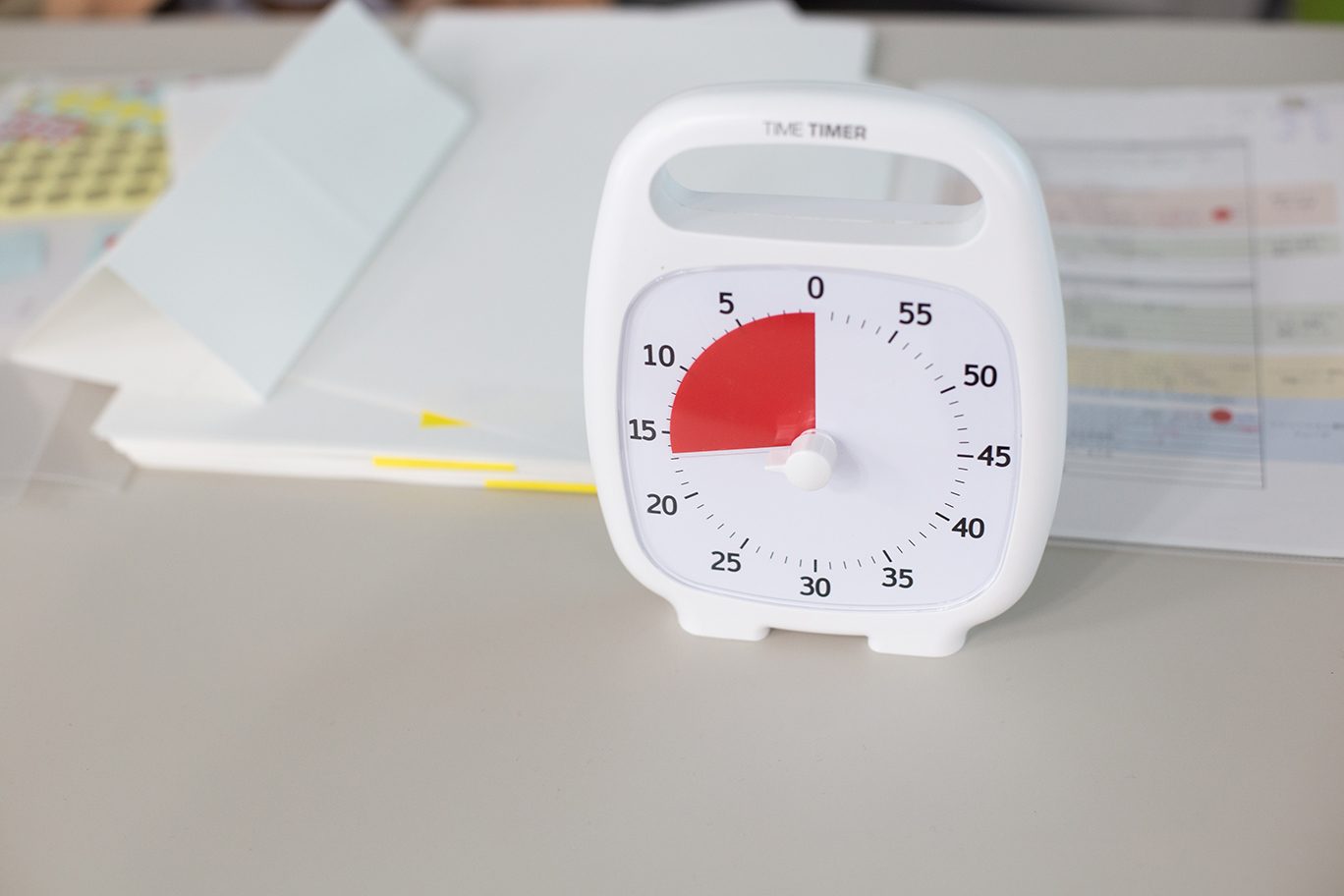
Design Sprints are divided into detailed timelines, in order to avoid endless discussion and to keep participants alert. Participants can quickly come up with ideas on the spot, without spending time worrying whether those ideas are "right." Sometimes the best ideas are the ones we are most hesitant to share!
2. Work together, alone

In addition to (and usually preceding) discussion, there is always set time for individual, silent work. If you are always in a dialogue and do not have time to think alone, it's easy for the discussion to be controlled by a few people, and good ideas may be lost in the discussion. Through independent thinking, we can ensure that everyone's ideas are heard and thus stimulate better solutions.
3. Creativity not required
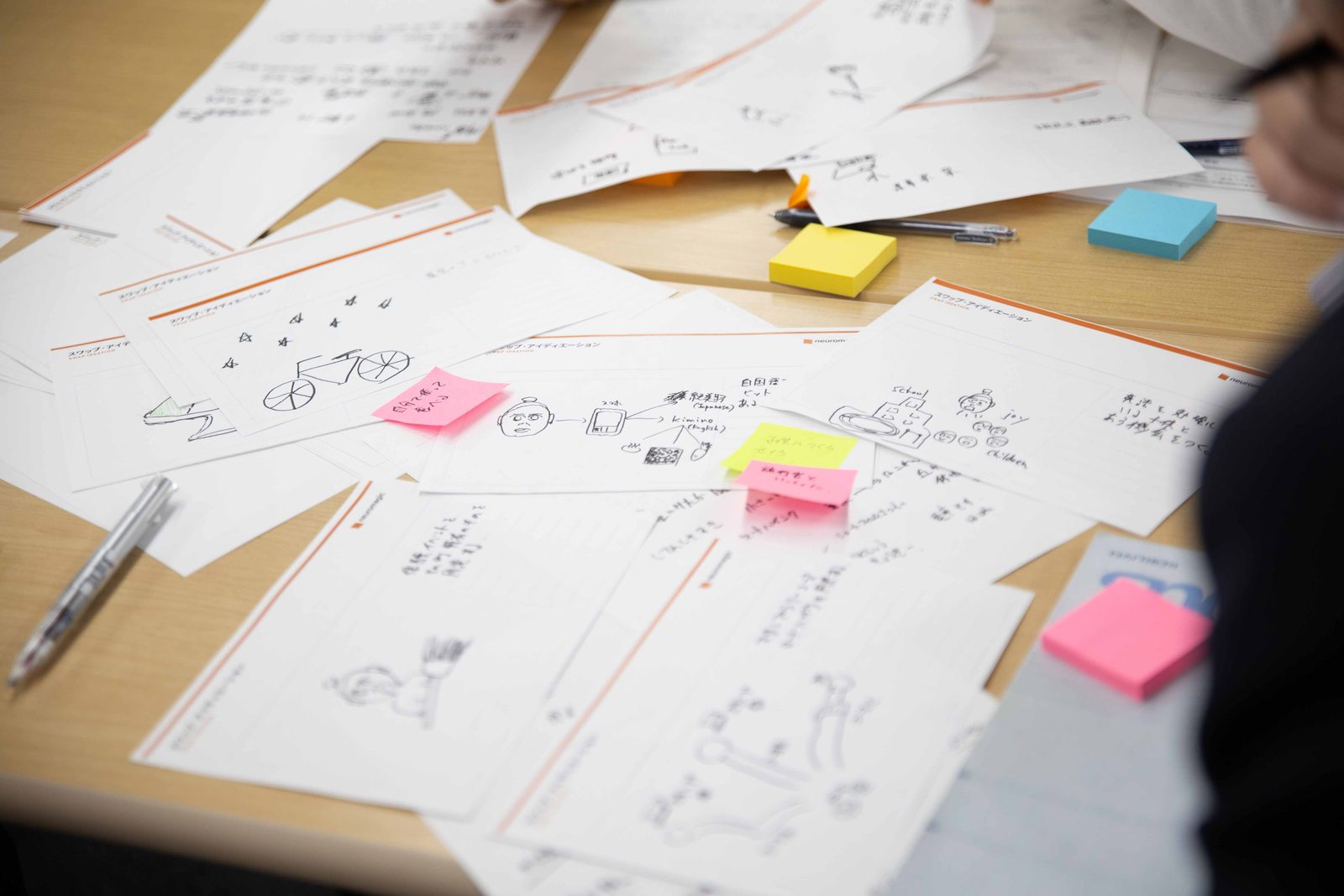
Creativity is not required! In fact, Design Sprints are well suited for those who feel they aren't creative. They outline a set of creative processes to follow for non-designers who may not be accustomed to creative thinking, including people in different departments like research, business, marketing, and customer service, drawing them together to come up with unique ideas from a variety of perspectives. We often hear clients say: "Oh! I'm not a designer, I don't have any creative, innovative ideas." But that's okay! Design Sprints are made to efficiently maximize the expertise of team members, and extract their knowledge to create something new as a team— no one individual is expected to come up with THE one stellar idea.
4. Decisions through voting
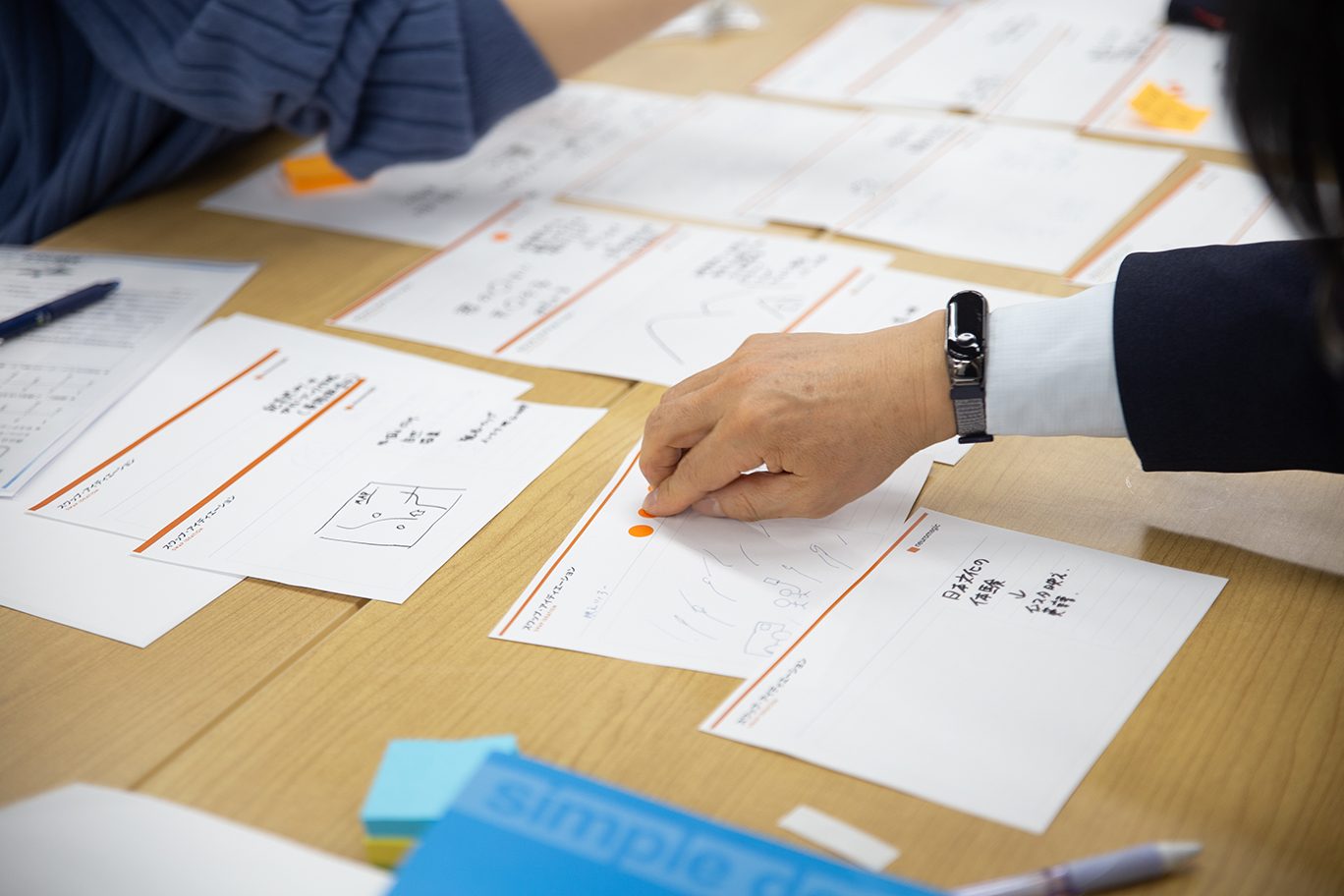
In a Design Sprint, the opinions of each participant are equal! To come to consensus and agree on a direction, it employs sticker dot voting. This helps us avoid opinions drowned out by the loudest speaker or highest ranking team member in the room. Sticker dot voting also creates a heat map, which is useful for visualizing everyones opinions and level of interest in a certain idea.
5. Open-minded
Before starting a Design Sprint, we always remind participants to keep an open mind! These are the principles we always go over before a Design Sprint at Neuromagic:
- No Wrong Answers. Each participants contributions can feed into the ideas of others, so we encourage everyone to write down and share as many ideas as possible within the time-box, the more the better.
- Take Action Over Being Right. What's the first requirement for starting a new project? Taking action! The purpose of Design Sprint is to come up with a solution and test it in a short period, so instead of pursuing the correct answer, it is better to roll up your sleeves and get your hands dirty! You will encounter problems that cannot be solved immediately, but the Design Sprint can help the team find and define the most important problems, and guide members step by step to find the best solution to test.
- "Failure" is Success. The purpose behind a Design Sprint is to test and validate an idea. If your idea fails, you'll have saved months of work spent developing a product or service that wouldn't succeed on the market. That's awesome! Now you know what to avoid and can keep moving forward.
6. Flexible
No one process is suitable for all situations or all teams. As long as you have mastered the core principles and understand the basic structure of the Design Sprint, steps and tools can be adjusted to suit the issue you're addressing. For example, in order to deepen the team members' understanding of users, we sometimes add persona creation to the Design Sprint, or create Impact/Effort matrix' to help determine the priority of a certain solution or problem. Be flexible in order to best address the issues at hand.
Preparing for Your Design Sprint
Once you decide to run a Design Sprint, in order to maximize it's effects, preparation is vital! A few of the important precautions you should take are:
- Get to Know Stakeholders. Ensure that all stakeholders related to the project have a consensus on the goals of this Design Sprint.
- Practice, Practice, Practice. If you're running a remote Design Sprint, have a short training with participants to teach them about the software you'll be using. Facilitators can also run through activities with colleagues to see what difficulties might arise, and which exercises need to be explained more carefully. It's not always necessary to run through an entire in-person sprint, but if it is your first time facilitating trial some activities to help you feel prepared.
- Prepare Supplies: Follow or create a checklist to make sure you have everything you need on the day of the Design Sprint.
If you want a kick-start in preparing for your Design Sprint, check out our downloadable PDF Design Sprint Pre-Worksheet.
Following-Up on Your Design Sprint
The Design Sprint is over, now what? This is something Jake Knapp didn't mention in Sprint. Here are three important things to keep in mind when after running a Design Sprint:
- Create a Results Report. This can be shared with colleagues who didn't participate in the Sprint but want to know more, and as a reference for team members as they move forward with product/service development.
- Carefully Check Feedback from User Testing. This info is super valuable. Whether using it to fine-tune a product or service development direction, directly enter the development optimization stage or drop an idea and rethink, the team needs to spend time together to discuss and reach consensus based on this feedback.
- Review and Reflect. How can you make your next Design Sprint run even better? Reflect on highlights, low points, and lessons so that you can keep the good and ditch the bad.
A lot will have happened over your 4-5 day sprint. We created a downloadable PDF Reflection Sheet you can use to gather your thoughts and review.
The great thing about Design Sprints is that through structured discussions, your team can come up with solutions, produce prototypes and test them in under one week! However, what this article (and the Design Sprint, in general) does not address is team members' preliminary understanding of the problems they want to solve through the Sprint, competitive analysis, market research, and the individual members participating in Sprint, which will also factor into your product or service development process.
Rather than conducting in-depth research, interviewing users, gaining deep understanding user pain points and carefully defining problems, Design Sprints focus on rapid validation. When used correctly, team members from different fields will be able to share their knowledge, have more efficient discussions, and find great solutions together.
Happy Sprinting!
Tags